Desert vs. Subterranean Termites: What’s Most Common in Arizona?
Arizona homeowners face a unique set of termite risks due to the state’s warm climate, dry conditions, and year-round construction. While many people think of termites as a single pest problem, the reality is that different termite species behave very differently—and understanding which type is most common in Arizona can make all the difference in protecting your home.
Two types are most often discussed: desert termites and subterranean termites. While both exist in Arizona, one poses a significantly greater threat to residential homes.
Subterranean Termites: Arizona’s Most Common and Destructive Species
Subterranean termites are by far the most common termite species found in Arizona homes. They live underground in large colonies that can number in the hundreds of thousands—or more. Because they require constant moisture, these termites build mud tubes that allow them to travel from the soil into your home without being exposed to air or light.
What makes subterranean termites especially dangerous is how quietly they work. They feed on wood from the inside out, often leaving very little visible evidence until significant structural damage has already occurred. Many homeowners don’t realize there’s a problem until doors stick, walls sound hollow, or visible mud tubes appear along foundations, garages, or interior walls.
Arizona’s irrigation systems, landscaping, slab foundations, and even minor plumbing leaks create the perfect environment for subterranean termites to thrive. This is why they account for the vast majority of termite infestations we see across the state.
Desert Termites: Present, But Far Less Common
Desert termites, sometimes called dry-environment termites, do exist in Arizona—but they are far less likely to infest residential homes. These termites typically live in dead trees, cacti, fence posts, or untreated wood found outdoors. Unlike subterranean termites, desert termites do not usually require contact with the soil and tend to form much smaller colonies.
Because they prefer natural desert materials and undisturbed environments, desert termites are rarely responsible for serious structural damage to homes. While they can occasionally be found in older or poorly maintained wooden structures, they are not the primary concern for most homeowners in Arizona.
Key Differences Between Desert and Subterranean Termites
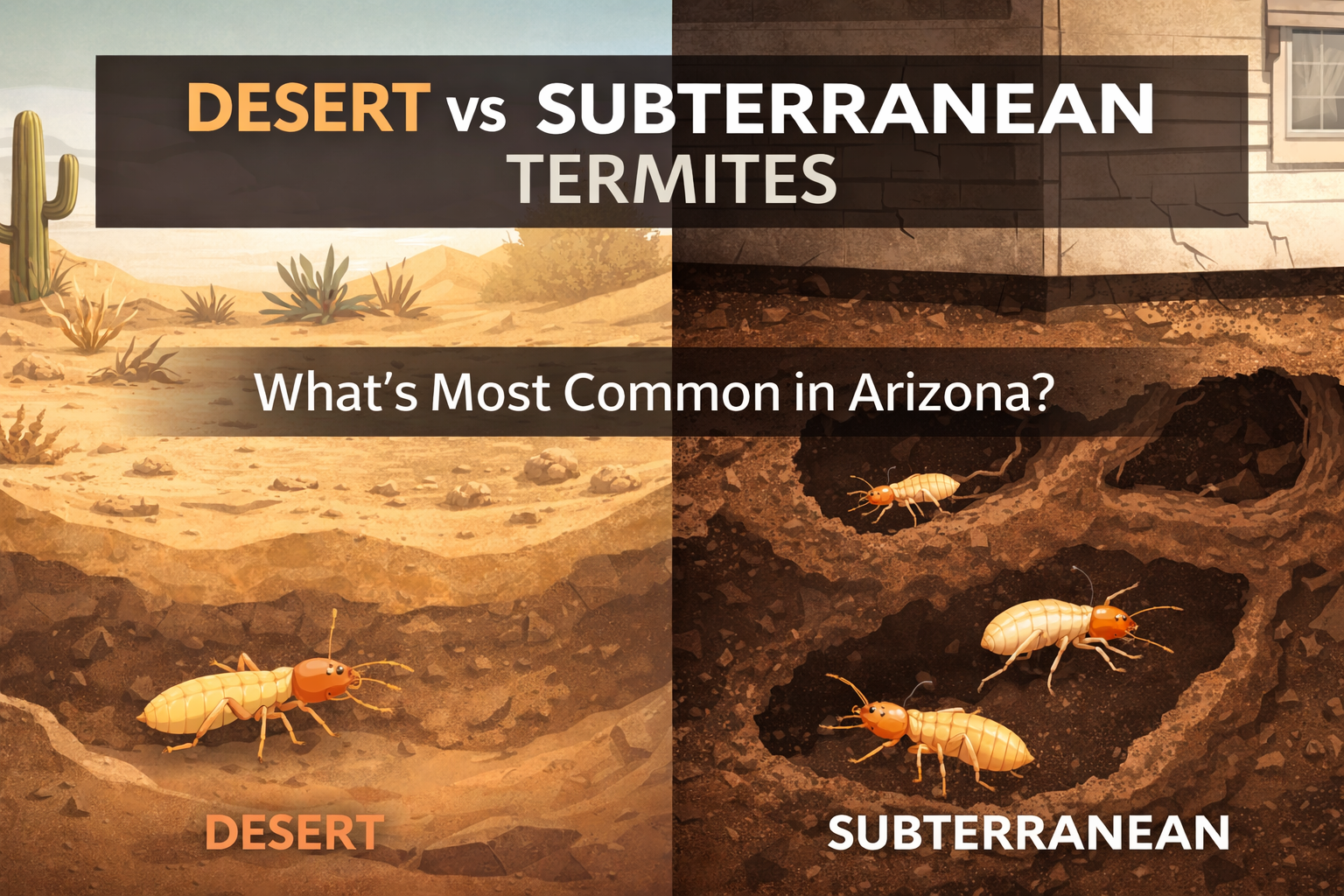
The biggest difference between these two species comes down to habitat, behavior, and risk level. Subterranean termites live underground, rely on moisture, and actively seek out homes as food sources. Desert termites, on the other hand, are more isolated and tend to stay in natural desert environments.
Subterranean termites spread quickly, cause extensive damage, and require professional treatment to eliminate the entire colony. Desert termites are much less aggressive and far less likely to invade a modern home.
Why Subterranean Termites Are the Real Threat to Arizona Homes
Because subterranean termites live beneath the soil, homeowners often don’t see them until the infestation is advanced. Their colonies work continuously, and a single colony can cause thousands of dollars in damage in a surprisingly short period of time.
Arizona’s climate allows subterranean termites to remain active nearly year-round, meaning there is no true “off season.” Even homes built on concrete slabs are at risk, as termites can enter through expansion joints, plumbing penetrations, and tiny cracks in the foundation. This is why regular termite inspections are so important, even if your home appears to be in great condition.
How Professional Termite Inspections Identify the Right Threat
A professional termite inspection does more than confirm the presence of termites—it identifies which species is present and how best to eliminate it. Subterranean termites require specialized treatments such as bait stations, soil treatments, or foam applications designed to target the colony at its source.
At The Termite Division, we inspect common entry points, foundations, garages, interior walls, and landscaping areas to determine both current activity and future risk. Proper identification ensures the treatment plan actually works, rather than just masking the problem.
Protecting Your Arizona Home Starts With Knowing What You’re Dealing With
While desert termites may sound intimidating, subterranean termites are the most common and most destructive termite species affecting Arizona homes. Knowing the difference allows homeowners to take the right preventive steps before costly damage occurs.
If you live in Arizona and haven’t had your home inspected recently—or if you’ve noticed mud tubes, wood damage, or unexplained signs—now is the time to act.
Schedule a Free Termite Inspection
Early detection can save you thousands in repairs. The Termite Division offers free, no-obligation termite inspections for homeowners across Arizona. Our experienced team will identify the type of termite activity present and recommend the best solution to protect your home.
Schedule your free termite inspection today and get peace of mind before termites cause serious damage.